
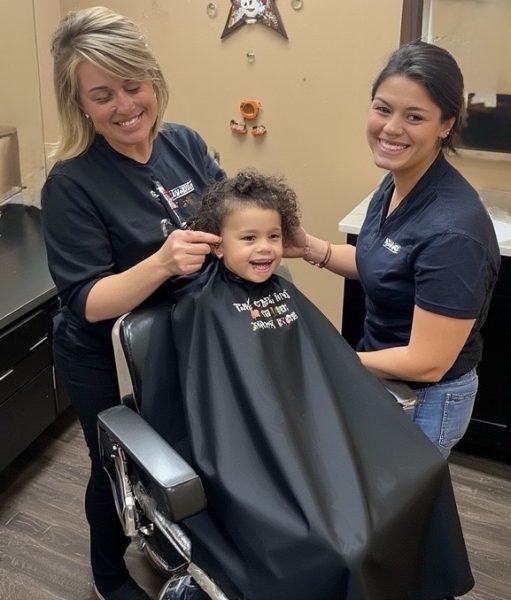
A toddler haircut can feel like a simple task on paper, but for many parents it quickly turns into a stressful experience filled with tears, wiggling, and uncertainty. Fortunately, understanding why haircuts are so difficult at this age can help parents feel more prepared—and more confident—when the time comes to book that appointment or pick up the scissors at home.
Toddlers are in a unique developmental stage where curiosity, independence, and big emotions collide. As a result, a haircut combines unfamiliar sensations, loss of control, and the expectation to sit still, which is a tall order for a child still learning how the world works. In many cases, what seems minor to adults feels overwhelming to young children.
Big Emotions
New Experiences like a Toddler Haircut Can Cause Big Emotions
From a toddler’s perspective, a haircut isn’t about looking neat—it’s about navigating a strange situation. Salons introduce new sights and sounds: buzzing clippers, sharp scissors, bright lights, and strangers. These can make a calm environment can feel intimidating.
Sensory sensitivities like hair falling onto the neck or the vibration of clippers can be uncomfortable for some children. Because of this, many parents seek out sensory friendly haircuts for kids, which are designed to reduce stimulation and allow children to feel safe and respected.
Toddlers may not be able to explain what feels scary or uncomfortable, so their frustration comes out as crying or refusal. When that happens, attempts to rush or restrain them can intensify the reaction rather than calm it. Over time, these negative moments may shape how children feel about haircuts in general.
Developmental Considerations
Development Impacts the Toddler Haircut Experience
A successful toddler haircut requires understanding. At this stage, toddlers are learning autonomy and often resist situations where they feel they have no choice. Therefore, being told to “sit still” while someone touches their head can feel threatening.
Most toddlers struggle to stay focused for more than a few minutes, especially when they’re uncomfortable. Additionally, being hungry or a missing a nap can quickly lower their tolerance. Not surprisingly, the likelihood of a meltdown increases dramatically under those conditions.
Parents may also feel pressure—whether from other customers, stylists, or their own expectations. Unfortunately, that stress can unintentionally heighten a child’s anxiety. Toddlers are highly sensitive to emotional cues, and as a result, parental tension often transfers directly to them.
An Easier Way
Practical Strategies to Make Toddler Haircuts Easier
Preparation can help. For instance, talking about haircuts in advance or reading children’s books about the experience can help toddlers know what to expect. Likewise, some parents find success watching haircut videos together or letting their child “cut” a doll’s hair first.
Choosing the right environment matters too. Look for salons that specialize in young children or offer sensory friendly haircuts for kids, with quieter tools, patient stylists, and flexible pacing.
Whenever possible, schedule a haircut when your toddler is well-rested and fed. In addition, bringing familiar comfort items—like a favorite toy, snack, or a device to watch their favorite show—can help sooth the process.
Optimistic Outlooks
Building Positive Long-Term Habits
One challenging haircut doesn’t mean all future ones will be difficult. However, early experiences do matter. A calm, supportive approach helps toddlers associate haircuts with safety rather than fear. Consistently, praise, reassurance, and patience go a long way in building trust.
As children grow, repeated positive experiences—especially in environments that respect sensory needs—can transform a once-dreaded errand into a routine part of life. Ultimately, flexibility and empathy are often more important than achieving a perfect cut.
With the right mindset, thoughtful preparation, and a supportive setting, a toddler haircut can shift from a dreaded milestone to a manageable—and sometimes even positive—experience for both parent and child.